
Many people considering orthodontic treatment wonder how clear aligners work and whether they can safely move teeth into the right position. Clear aligners in Lower Hutt have become increasingly popular as a discreet and comfortable alternative to traditional braces.
But have you ever wondered about the science behind those nearly invisible trays? Understanding how clear aligners gently apply pressure to move teeth over time can help you feel confident about whether this treatment is right for you.
In this guide, we’ll explore the fascinating way clear aligners shift your teeth gradually, the timeline you can expect, and why clear aligners have become a popular orthodontic option for many New Zealanders.
The Science Behind Tooth Movement
Your teeth are held in place by a sophisticated system of bones, ligaments, and tissues called the periodontal system. When steady, gentle pressure is applied to a tooth, the body responds by breaking down bone on one side and building new bone on the other side. This natural biological process allows teeth to move safely and steadily.
Clear aligners work by applying this gentle, continuous pressure. Unlike traditional braces that use metal brackets and wires, aligners use custom-made plastic trays that fit snugly over your teeth.
Each tray is designed to move your teeth by a small amount, usually just 0.25 millimetres per aligner. Because the pressure is so gentle and distributed evenly, your teeth can move comfortably without excess force. Your dentist in Lower Hutt will explain how this technology works during your initial consultation.
This gradual approach is actually safer for your teeth. Your periodontal system has time to adapt and rebuild bone around the moving teeth. When pressure is too strong or irregular, it can cause damage to the roots of your teeth or harm the surrounding tissues. This is why professional supervision throughout your clear aligners treatment is essential for optimal results.
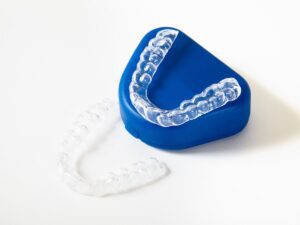
How Clear Aligners Are Custom-Made
One of the reasons clear aligners work so effectively is that they’re custom-made just for your teeth. The process begins with a 3D scan or impression of your mouth. Advanced computer software then maps out every tooth movement needed to reach your treatment goal.
Your dental professional will plan the exact sequence of movements. The software calculates how much force is needed at each stage and designs each successive aligner to move your teeth in small, precise increments. This might result in 20 to 40 aligners (or more), depending on the complexity of your case.
Because every aligner is specifically designed for your teeth and your treatment plan, the pressure applied is optimal. Each aligner is designed based on careful digital planning, refined over years of orthodontic research, to move teeth in small, controlled increments.
The Timeline: What to Expect
Most clear aligner treatments take between 6 and 24 months, though the exact timeframe depends on how much your teeth need to move. Your dental professional may provide you a personalised timeline based on your specific needs. Suitability, timelines, risks, costs, and outcomes vary and will be discussed during consultation.
You’ll typically wear each aligner for 7 to 10 days before moving to the next one. During this time, the aligner gently pushes your teeth, and your body responds by reorganising the bone. For anyone exploring clear aligners in Lower Hutt, as the bone adapts, your teeth shift slightly. When you move to the next aligner, the new position becomes the starting point, and the process repeats.
It’s important to wear your aligners for 20 to 22 hours each day for optimal results. This consistent pressure tells your body that these movements are intentional and should be supported by bone remodelling. If you remove your aligners too frequently, the process takes longer because your body doesn’t receive the continuous signal to adapt.
The Comfort Factor
Because clear aligners apply gentle, incremental pressure, most people find them more comfortable than traditional braces. You might feel slight pressure when you first put in a new aligner this is normal and shows the system is working. However, most people find this manageable, and many report the experience as more comfortable than traditional braces, though individual comfort varies.
The smooth, plastic surface of aligners also means there’s nothing sharp or uncomfortable rubbing against your gums and cheeks. Many people find they adjust to wearing aligners within the first week or two, though the adaptation period varies between individuals.
If you do experience significant discomfort, your dental professional can adjust your treatment plan. The beauty of custom-made aligners is that they can be modified if needed, ensuring your comfort throughout the journey.
Aligner Materials and Their Role
Modern clear aligners are made from a special plastic material that’s both strong and gentle. The material is designed to apply consistent, predictable force over the time you wear each aligner. It’s durable enough to handle daily wear but flexible enough to distribute pressure evenly across your teeth.
The thickness and flexibility of the plastic are carefully engineered. Different manufacturers may use slightly different materials, but all quality clear aligners are designed with tooth movement science in mind. The material won’t irritate your gums, and it’s safe for daily contact with your mouth tissues.
Because the material is transparent, the aligners are virtually invisible when worn. Many people appreciate this feature because it allows them to straighten their teeth without feeling self-conscious about their appearance during treatment.
Maintaining Results: The Importance of Retention
Once your teeth have moved into their final positions, they don’t automatically stay there. Your body still “remembers” where your teeth want to be naturally, and they can slowly shift back over time. This is why retention is so important after clear aligner treatment.
After your active treatment is complete, you’ll typically wear a retainer to keep your teeth in their new positions. Your dental professional might recommend wearing a fixed retainer behind your teeth or a removable retainer (often similar to an aligner) that you wear at night.
This keeps your teeth stable as your bone completely hardens around their new positions. Think of retention as the final part of your treatment plan. It’s not optional if you want to enjoy straight teeth for years to come.
Frequently Asked Questions
How often should I switch to a new aligner?
You should typically change to the next aligner every 7 to 10 days, following your dental professional’s guidance. Switching too early or too late can affect how efficiently your teeth move, so it’s important to stick to the schedule provided.
Can I remove my aligners while eating and drinking?
Yes, clear aligners should be removed while eating and drinking (except water). This protects the clear aligners from staining and damage, and it prevents food particles from getting trapped between your teeth and the aligner. Just remember to put them back in promptly after meals.
Will my teeth hurt during clear aligner treatment?
Most people experience mild pressure or soreness rather than pain, especially when first putting in a new aligner. This is a sign that your teeth are moving as intended. Any discomfort usually settles within a few days. If you experience significant pain, contact your dental professional.
Sources
- American Association of Orthodontists (AAO) – Clear Aligners
https://aaoinfo.org/treatments/clear-aligners/ - PubMed Central – Clear Aligner Therapy: An Overview
https://pmc.ncbi.nlm.nih.gov/articles/PMC8383674/ - PubMed Central – Orthodontic Treatment with Clear Aligners and the Scientific Reality Behind Their Marketing
https://pmc.ncbi.nlm.nih.gov/articles/PMC7018497/ - Journal of Clinical Medicine – Clear Aligner Treatment: Different Perspectives Between Orthodontists and General Dentists
https://www.mdpi.com/2077-0383/12/11/3740
Conclusion
Clear aligners work through a remarkable combination of gentle pressure and your body’s natural ability to adapt. By applying small, incremental movements over time, aligners safely move teeth while keeping you comfortable throughout the process.
The custom-made design ensures that pressure is exactly right for your teeth, and the transparent material means you can straighten your smile discreetly.
If you’re interested in learning whether clear aligners might be suitable for your needs, a consultation with your dental professional is the best first step.
The team at Hutt Dental Hub can assess your teeth and discuss whether clear aligners are the right option for your orthodontic needs. For suitable patients, Hutt Dental Hub offers ClearChange clear aligners, a NZ-made clear aligner system designed to help straighten teeth discreetly.

Hutt Dental Hub is a dental clinic serving the Lower Hutt community. Our dentist in Lower Hutt provides a wide range of services including general dentistry, dental implants, orthodontics, emergency appointments, and dental sedation. Using advanced 3D digital technology, we deliver accurate, patient-focused care. As NZDA members, our team is committed to ongoing professional development and best practice.