Losing a tooth can affect more than just your ability to chew. It can change the way you smile, speak, and feel about your appearance. For many people in Lower Hutt, the biggest concern before getting a single dental implant in Lower Hutt is a simple one: will it look real?
It is a fair question. Nobody wants a replacement tooth that looks out of place or draws unwanted attention. The good news is that modern dental implants are designed with aesthetics in mind.
When placed and restored correctly, a single implant may blend in very naturally with your surrounding teeth, and some patients find it difficult to distinguish from a natural tooth, though results can vary depending on individual circumstances.
This article explores what gives a dental implant its natural appearance, what factors can influence the outcome, and what you can reasonably expect from the process.
What Makes a Dental Implant Look Like a Real Tooth?
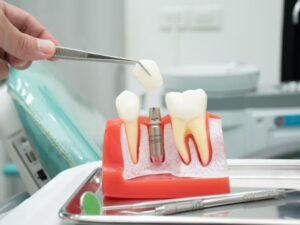
A dental implant is made up of three parts: a titanium post that sits in the jawbone, an abutment that connects the post to the crown, and a crown the visible part that looks like your tooth.
It is the crown that does the heavy lifting when it comes to aesthetics. For those considering a single dental implant in Lower Hutt, understanding what the crown is made from can help set realistic expectations.
Modern dental crowns are typically crafted from porcelain or ceramic materials that can be colour-matched, shaped, and contoured to closely mimic a natural tooth. Your dentist will carefully assess the colour of your surrounding teeth using shade guides to ensure the crown sits in harmony with your smile.
Unlike older restorations, today’s materials reflect light in a way that closely resembles natural tooth enamel, giving the crown depth and translucency rather than a flat, artificial look.
How Is the Colour and Shape Matched?
Before a crown is made, your dentist will take impressions or digital scans of your mouth. Dental clinic in Lower Hutt will take impressions or digital scans of your mouth before the crown is made.
Shade matching is done carefully in natural lighting conditions where possible. The goal is to match not just the general colour, but also the subtle variations slightly lighter at the tip, slightly darker near the gum line that make natural teeth look three-dimensional.
The shape of the crown is also designed to match the proportion and contour of the neighbouring teeth. A tooth that is slightly too wide or too square can draw the eye in a way that looks unnatural. Getting the shape right is as important as getting the colour right.
Does the Gum Around an Implant Look Natural?
The gum tissue surrounding an implant plays a significant role in how natural the result looks. When healthy, the gum should frame the base of the crown in the same way it does for a natural tooth with gentle curves and no visible dark lines.
A well-planned implant placement allows the gum tissue to heal and settle in a natural position around the crown. In some cases, your dentist may use a temporary crown during the healing phase specifically to help guide the gum tissue into the right shape before the final crown is fitted.
If the implant is placed too early after tooth loss, there may be some bone or gum loss that makes achieving an ideal aesthetic outcome more challenging. This is one reason why timing and treatment planning matter.
What Factors Can Affect the Final Appearance?
While dental implants may look very natural for many patients, the outcome can vary depending on several factors:
Bone volume plays an important role, adequate bone is needed to position the implant at the correct angle and depth. If bone loss has occurred after extraction, a bone graft may be needed before placement.
Healthy gum tissue is equally important, as gum disease may need to be treated before proceeding. The quality of crown materials also matters, in general, higher-grade ceramic and zirconia tend to produce more lifelike results than older metal-based options.
Finally, careful digital treatment planning helps ensure the implant is positioned to support both function and aesthetics.
How Does It Feel Compared to a Natural Tooth?
Many people report that, once adjusted, their implant feels similar to a natural tooth, though individual experiences may differ.
Through a process called osseointegration, the dental implant may integrate with the jawbone over time, becoming a stable part of your mouth over time, for many patients. This stability contributes to the natural feel and function of the restoration.
It is worth noting that individual healing experiences vary. Some people adjust quickly, while others may take a few weeks to feel fully comfortable with the new tooth.
Frequently Asked Questions
Can people tell I have a dental implant?
In most cases, no. When a crown is well-matched in colour, shape, and size, it is difficult to distinguish from a natural tooth, though outcomes vary depending on individual factors. Over time, some patients report they stop noticing it themselves.
How long does it take before the implant looks natural?
The crown placed after healing is intended to look natural, though the gum tissue around it may continue to settle and adapt over the first few months. During this time, the overall appearance may continue to improve slightly.
Will my implant crown stain like a natural tooth?
Ceramic and porcelain crowns are resistant to staining compared to natural tooth enamel. However, they are not entirely stain-proof, and maintaining good oral hygiene along with regular dental visits is important for keeping your crown looking its best.
What if I am not happy with how my implant looks?
It is important to communicate your concerns with your dentist before the final crown is placed. Adjustments to the shade, shape, or size can often be made at the trial stage. If you have concerns after placement, speak with your dental team there may be options available depending on the specific issue.
Conclusion
A single dental implant, when planned and placed well, may look very natural. From the custom-matched crown to the way the gum tissue frames the restoration, the details all work together to create an outcome that blends into your smile.
Of course, results can vary depending on individual circumstances, and a thorough assessment is a helpful way to understand what is realistic for your specific situation.
If you have questions about tooth replacement options or what to expect from the process, the team at Hutt Dental Hub Lower Hutt would be happy to help you explore your options and discuss what may suit you.

Hutt Dental Hub is a dental clinic serving the Lower Hutt community. Our dentist in Lower Hutt provides a wide range of services including general dentistry, dental implants, orthodontics, emergency appointments, and dental sedation. Using advanced 3D digital technology, we deliver accurate, patient-focused care. As NZDA members, our team is committed to ongoing professional development and best practice.