If you’re missing most or all of your teeth, or your dentures have become uncomfortable and unreliable, you may be wondering what’s actually involved in getting full mouth dental implants.
It’s a bigger decision than a single filling or crown, so it makes sense to want a clear picture before you book anything. Full Mouth Dental Implants in Lower Hutt follow a structured, staged process from initial assessment through to your final restoration.
This guide walks through each stage so you know what to expect, how long it may take, and what factors can affect your individual journey.
At a Glance
- Full mouth implant treatment usually involves 4–6 stages, from assessment to final restoration
- Titanium implant posts are placed in the jawbone and given time to integrate before the final teeth are fitted
- Healing and integration can take several months, depending on individual bone and gum health
- Options may include a full-arch, implant-supported approach or implant-retained dentures, depending on your clinical needs
- A personalised treatment plan is only confirmed after a thorough in-person assessment
What Are Full Mouth Dental Implants?
Full mouth dental implants are a treatment approach that replaces an entire arch, or all of the teeth, using a series of titanium implant posts anchored into the jawbone. Rather than treating each gap separately, the approach is designed to restore function and appearance across the whole mouth in a coordinated way.
For patients exploring full mouth dental implants in Lower Hutt, this whole-arch approach is often considered when several teeth are missing or failing at once.
The posts act as an artificial tooth root. Over time, a natural process called osseointegration allows the jawbone to bond with the titanium surface, creating a stable foundation. A custom-made prosthesis, either fixed or implant-retained, is then attached to these integrated posts.
Because every patient’s bone density, gum health, and number of remaining teeth differ, the exact combination of implants and prosthesis used is planned individually rather than applied as a one-size-fits-all solution.
Who Might Consider Full Mouth Dental Implants in Lower Hutt?
People typically explore this option when several teeth are missing, failing, or causing ongoing discomfort with eating and speaking. It’s worth an assessment if any of the following sound familiar.
- You have multiple missing teeth, or several that are severely worn, decayed, or loose
- Your current dentures shift, click, or feel unstable during meals or conversation
- A dentist has previously identified bone loss following tooth loss or extraction
- You’d prefer a fixed option rather than continuing with removable dentures
- You’d like to discuss restoring a more even, natural-looking smile
Not everyone who experiences these signs will be a suitable candidate. Suitability depends on individual gum condition, bone density, and general health, which is why an assessment comes before any recommendation.
What Happens During the Full Mouth Dental Implants Process?
The process generally follows five stages, though your dentist may adjust the order or add steps depending on your clinical needs.
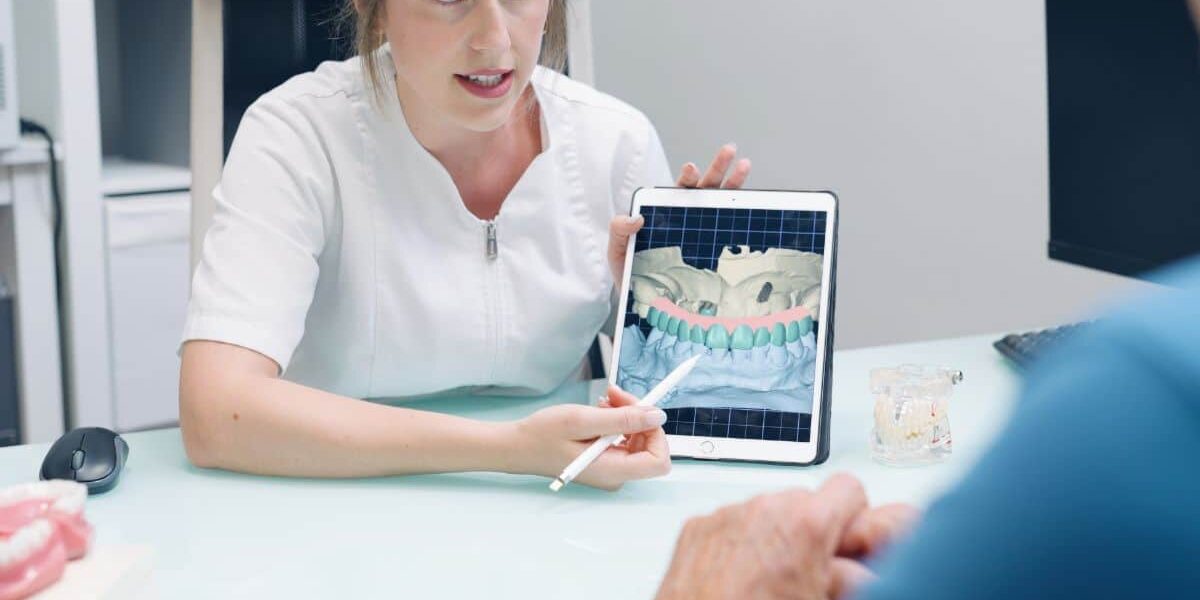
- Comprehensive assessment. Your dentist reviews gum health, jaw structure, and bone condition, often using digital X-rays or 3D imaging, to understand what your mouth needs before any plan is made.
- Treatment planning. Based on the assessment, a plan is developed that sets out how many implants may be needed, where they’ll be positioned, and what type of final restoration fixed bridge or implant-retained denture may suit your situation.
- Implant placement. Titanium posts are placed into the jawbone under local anaesthetic. Some patients may receive temporary teeth during this stage.
- Healing and integration. The jawbone gradually bonds with the implant posts over a period that commonly spans several months. This timeframe varies between patients depending on bone quality and healing response.
- Fitting the final restoration. Once integration is confirmed, custom-made replacement teeth are attached to the implants, finishing the visible result of the treatment.
Each stage is checked before moving to the next, so the pace of treatment is guided by how your body responds rather than a fixed calendar.
What Does Recovery Involve?
Recovery mainly relates to the healing period after implant placement, when the jawbone integrates with the titanium posts. Most patients describe this stage as manageable, with some swelling or tenderness in the days immediately following surgery.
Your dental clinic in Lower Hutt will usually recommend softer foods for a period after placement, along with specific hygiene instructions to protect the healing site. Follow-up visits allow your clinical team to monitor healing and confirm the implants are integrating as expected before the final restoration is fitted.
Because healing speed differs from person to person, your dentist will give you a more specific expectation for your own case rather than a general timeframe that may not apply to your circumstances.
What Are the Benefits and Considerations?
Full mouth implants are designed to address several practical concerns that come with missing or failing teeth, though individual outcomes vary and are best discussed at a consultation.
Patients often look into this option because a fixed restoration doesn’t need to be removed at night. Implants may also help support the jawbone by providing ongoing stimulation, which can reduce the bone changes that sometimes follow tooth loss.
Many patients also raise chewing comfort and speech clarity as motivations, since loose dentures or gaps can affect both. As with any dental treatment, results depend on individual anatomy, oral hygiene, and how well aftercare guidance is followed. Your dentist can talk through what’s realistic for your specific case.
Frequently Asked Questions
How long does the full mouth dental implants process take from start to finish?
Timelines vary by patient, but the overall journey from initial assessment through healing to the final restoration commonly spans several months. Bone quality, healing response, and whether additional procedures like bone grafting are needed can all affect the timeline. Your dentist can give you a clearer estimate once your assessment is complete.
Is bone grafting always needed for full mouth implants?
Not always. Bone grafting is sometimes recommended when there isn’t enough bone density to support dental implants placement, which can happen after long periods of missing teeth. Your dentist will assess your bone structure and explain whether grafting applies to your situation.
Is the full mouth dental implants procedure uncomfortable?
Implant placement is carried out under local anaesthetic, and many patients describe the experience as manageable. Some soreness or swelling afterward is common and generally settles within a few days. Your dental team can discuss options to help you feel more comfortable throughout treatment.
Will I be without teeth during the healing period?
Many patients are provided with temporary teeth while the implants integrate with the jawbone, so you’re not typically left without any teeth during healing. Your dentist will confirm what applies in your specific treatment plan.
How much do full mouth dental implants cost in Lower Hutt?
Cost depends on individual factors such as the number of implants required, bone condition, and the type of final restoration chosen. A clear, itemised estimate is generally provided after your assessment, once your specific treatment needs are known.
Conclusion
Full mouth dental implants follow a careful, staged process assessment, planning, placement, healing, and final restoration with each step tailored to individual bone health and treatment needs.
While timelines and outcomes vary from patient to patient, understanding the process in advance can make the decision feel less daunting.
If you’re weighing up your options for Full Mouth Dental Implants in Lower Hutt, the team at Hutt Dental Hub Lower Hutt can talk you through an assessment and explain what a personalised plan might involve for your situation.
Sources:
- https://www.govt.nz/browse/health/gps-and-prescriptions/government-help-with-dental-costs/
- https://pubmed.ncbi.nlm.nih.gov/27506001/
- https://www.mayoclinic.org/tests-procedures/dental-implant-surgery/about/pac-20384622
- https://my.clevelandclinic.org/health/treatments/10903-dental-implants

Hutt Dental Hub is a dental clinic serving the Lower Hutt community. Our dentist in Lower Hutt provides a wide range of services including general dentistry, dental implants, orthodontics, emergency appointments, and dental sedation. Using advanced 3D digital technology, we deliver accurate, patient-focused care. As NZDA members, our team is committed to ongoing professional development and best practice.